Yes, you could say
it's a remake.
We hardly touch or remove
the main intrigue or the plot outline;
We follow it exactly.
Moreover, we even have similar scenes.
Not scenes but shots.
Such as, for example when he gets out of the car and looks
around the corner where she disappeared.
We have recreated the visual style of
Chabrol's original version.
There’s an scene that we recreated
exactly as the original one.
This is a scene where
the main character's mother and
his wife are sitting at a table looking at photos.
Chabrol's movie starts right in that moment,
when they browse through the family photo archive.
And they talk about how much he's grown.
And since I like to add photographic context to movies,
it's been my passion for a long time since "The Banishment".
I've decided that this episode will definitely be in the movie.
We did not place it at the very beginning of the film
but in the middle, almost towards the end.
So some homages to Chabrol remain.
I really like that there's a silent part in the movie.
We even extended it as much as possible.
For twenty minutes, the main character simply acts,
and doesn't say a word.
I personally love it when there's no blah blah blah...
no dialogues or conversations...
no psychological interactions.
Just actions, someone doing something. It is delightful.
The way Chabrol's movies work has captivated me.
So I’ve decided to make a remake using Russian material,
set in a Russian context, in the Russian language.
We failed to do this in 2018 because we were unable to buy the rights to the script.
I'm glad that we didn't do it back in 2018,
because the film would have been different.
As a result of the Russian invasion of Ukraine,
every Russian family was affected by the war
and mobilization in 2022.
It was at that moment that we sat down to write the script
and everything you see in the film happens.
It was organically and naturally embodied in this story.
Because back then, in 2018, I felt that Chabrol
has set aside the part known as ‘office life’
the main character’s life at the office.
Even back then, I knew that I needed to come up
with something there.
This idea just came to my mind,
it sort of knocked the door and suggested
what it would become the basis
for this second part of the story.
I stepped into political territory for the first time
back in 2014 when we made the film “Leviatán”.
That film is about the political and religious context.
We already addressed this issue
while we were shooting in 2013.
The film was, so to speak, entirely vegetarian,
and we were able to afford to make a film
that was so critical of our country’s political system.
It’s impossible to make a film like “Minotaur” in Russia these days.
There’s no point in thinking about it,
because censorship in Russia is now total;
it’s impossible to say anything about the government
people go to prison for it.
One of my main conditions was final cut,
complete non-interference with the film’s concept.
I was very pleased with the reply
‘Andrei, you’re in France – it’s a country of authors.’
No one here is going to put pressure on you
or tell you how to shoot the film.
And we’ve started writing the script.
A friend of mine who’s a businessman in Russia called me
and told me about the scene, the scene with the mayor.
He was the actual participant in that scene.
He said: — We were called to the town hall;
we went into the office and the mayor told us,
‘you have businesses where all the town’s residents work.’
Quota has been set: this much from you, that much from you.
It’s not a made-up story; what you see in the film is reality.
When we started writing the script,
I knew I couldn’t pursue any of my other ideas;
I have to do this because it’s what’s happening in the country right now.

 74SSIFF | We Are Naza Too
03:52
 74SSIFF | Weichen (Dust) - kafea
21:03
 74SSIFF | Body of Glass - kafea
22:27
 74SSIFF | El mal hijo - kafea
17:14
 74SSIFF | Esta soledad - kafea
22:45
 74SSIFF | La ilusión de un verano sin fin - kafea
20:26
 74SSIFF | Jaleos - kafea
28:25
 74SSIFF | Tender Loving Care - photocall
01:32
 74SSIFF | 5 minutos más - photocall
01:40
 74SSIFF | Heart of the Beast - photocall
01:48
 74SSIFF | 7h40 ce matin-là / Milo - photocall
01:17
 74SSIFF | El castillo - photocall
01:21
 74SSIFF | Official Jury - photocall
00:59
 74SSIFF | Basque Film Gala - red carpet
02:01
 74SSIFF | Brad Pitt - red carpet
02:28
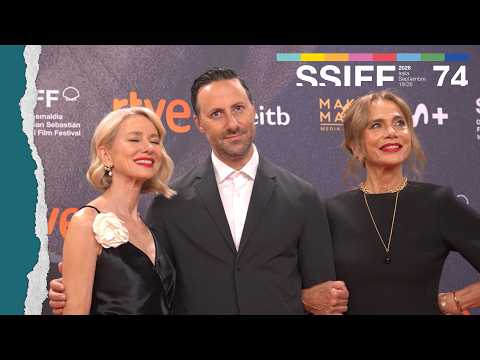 74SSIFF | Naomi Watts - red carpet
01:43
 74SSIFF | La bola negra - red carpet
02:33
 74SSIFF | Closing Ceremony - red carpet
01:17
 74SSIFF | Opening Ceremony - red carpet
01:27
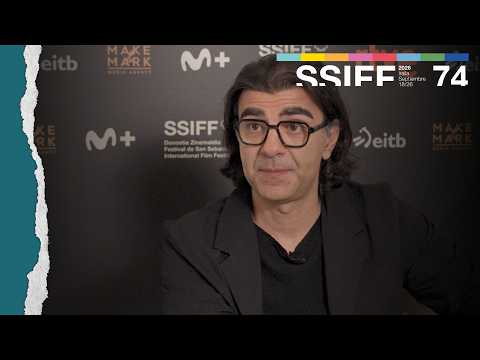 74SSIFF | Geister - interview
08:17