I feel at home.
Yesterday's arrival was magical because, of course, we've
been out presenting the film for like a month and a little while trying
to introduce ourselves and what we do. And, suddenly, we arrived here,
we felt the love of the people, we felt this beautiful city, our colleagues,
last night I went to have some «pinchos»... I don't know. I felt true
happiness. Like, what a pleasure to be home. What a pleasure to show the
film for the first time in Spain, I am very excited. Every time we come
to this festival it's magical, but I feel it more this year, of course.
We came with “Holy Camp!”, our first film. The festival has been super linked
to our creative, artistic and personal development. I mean, we've
been here with “Holy Camp!”. We have been here with “The Messiah” in the
Official Selection. We have also been producing “Cardo”. We have been
involved in other productions.
“The Messiah” was in the Official Selection.
Yes, yes, it's true.
So it really is a festival that
has seen us go through all these
stages. So you feel
very good and besides,
people's love is very
important for us.
For them, this is our job.
This country has
too many love stories
buried in the fields.
Movies don't end until people reach them. The mirror that the audience
represents is like the last montage of the film. It fits in a way
with people that you never imagine. People still haven't reached it, but
it's ready.
We are over and over with “La bola negra”,
“La bola negra”.
But it's the people who make a film be a film. A film is not such a thing
until it reaches the people. To me, the exciting thing about this whole
journey is the Q&As at the end of the film: sitting on stage and seeing
the excited faces, the heartbroken people thanking us for the experience from their seats.
To feel something we did sitting at home with a blank sheet,
to have a team shoot it with all their love. And then, locked in
the editing room, we rack our brains to make it and we go all the way
excited and feeling that there was something special aimed at the people
who are sitting in the armchair is just... Wow. It's just that films are
very magical. It's a very powerful thing that a collective experience
looking at a screen makes you go to so many places. It makes you realize things about you
and even make you make decisions. That's magic, really.
I think that the film has a lot of possible interpretations and it will
hit every spectator in a different way. You can interpret it as a love
story, as an epic drama, as a war movie, as a tribute to Federico García Lorca...
You can relate or not to his political discourse, you can relate
to the family drama, which is the basis of the whole film, you can enjoy
the visual beauty, the photography, the spectacular locations... I think
that each and every one of you will find something about “La bola negra”
that will hit you. So that's why it's hard to talk about it in a
nutshell. “La bola negra” has many layers and I can't wait for people
to discover them, because it's true. I didn't know which jokes from
“Paquita Salas” would be funny.
I thought there were going to be
other jokes included.
If I had placed a bet, I would have lost it. Turns out, now, the funny
ones are this one, this one and this one.
I would never have expected the «¿qué mail?» thing to be there.
I would have removed «¿qué mail?». That's it, I said it. Now, throw me to
a bonfire. I wanted to remove the «¿qué mail?» , that's it.
And we left it there.
We left it there thanks to you. I don't know, I don't remember
who decided it, but, things like this happen.
Why didn't you ever tell me your
father was alive?
Because you didn't know him.
Well, that's because you've never
told me about him either.
Alberto, don't break my balls, okay?
I'm telling you.
I think we have been
winning the audience over project
after project from a microtheater
where 15 people could fit,
to “Holy Camp!” in a
hall for 100 people
to a large room in
with 300 people.
Yes, 250.
“Paquita Salas” on Flooxer... I remind you that “Paquita Salas” premiered
on Neox, on Antena Tres, and it had a 0% audience. Little by little. And
it's been a long way to go... It had a 0.
Zero, zero, zero, zero.
There was no one watching it on Neox. We said: 'This series could work on
television'. And they said: 'Let's try it'. Well, it didn't. Little by
little. And we've been proving that we can have bigger budgets and keep
people watching, even though we're talking about proposals that big
executives would not believe anyone would watch. Well, when we contacted
a big studio, they said: make a biopic of Isabel Pantoja, don't make one
of La Veneno because nobody's going to watch it. So we had to make it
smaller, although it was already a big series at the time, but it wasn't
that big because people had trouble trusting these projects, which I
understand. Paquita Salas: a 50-year-old lady, a manager, played by a
30-year-old boy. I tell you: 'it's going to be a success', but they don't
believe me until I prove it. So, by doing bigger and bigger projects,
little by little, we have come this far, and I think that has been the
path: to do it little by little with our hands to gain the trust of the
audience and, therefore, of people who have money.
We have been producers from the
beginning because we were the ones
who would put the “Holy Camp!” sign
on the street and paste it.
We were the ones who were going
to buy the beds needed for the
scenography of “Holy Camp!”, the
ones who played the videos in the
microtheaters, the ones selling the
merchandising, the ones who
assembled and disassembled
everything after the performances to
go to the next gig...
So, we've always been the
production people behind the
projects. That has grown
together with the creators that
we are in the same way
to a place where
the producer, the screenwriter and
the director are a very intrinsic
part of it.
In order to create something that
I am satisfied with, I have
to know that I have creative
control and economic control,
because it is very important.
Sometimes, you might have creative
control, but not economic control.
Having all that in place for us
is very important because it allows
us to make decisions: well,
‘I didn't like this day of shooting.
Sorry, it has to be repeated'.
'But how are we going to do it?'.
Maybe if it's not your studio,
you can't do that. But, I say:
‘No, you have to repeat it and that's it'.
We repeat that.
'So where are you going to get the money from?'.
Well, this song that was going to
be a mega hit that we were going to
buy for I don't know how many
thousands of euros, we won't have
it anymore, I'll put it together
another way.
If I don’t have a location for the soldiers to eat in the scene
where Sebastian realizes that it's
Rafael's last night, we set
up tables out on the street, a good focus
and everyone around a table.
It's just that, I don't know, the people
who work with us know that
there's no such thing as no.
We're going to do what we can.

 74SSIFF | We Are Naza Too
03:52
 74SSIFF | Weichen (Dust) - kafea
21:03
 74SSIFF | Body of Glass - kafea
22:27
 74SSIFF | El mal hijo - kafea
17:14
 74SSIFF | Esta soledad - kafea
22:45
 74SSIFF | La ilusión de un verano sin fin - kafea
20:26
 74SSIFF | Jaleos - kafea
28:25
 74SSIFF | Tender Loving Care - photocall
01:32
 74SSIFF | 5 minutos más - photocall
01:40
 74SSIFF | Heart of the Beast - photocall
01:48
 74SSIFF | 7h40 ce matin-là / Milo - photocall
01:17
 74SSIFF | El castillo - photocall
01:21
 74SSIFF | Official Jury - photocall
00:59
 74SSIFF | Basque Film Gala - red carpet
02:01
 74SSIFF | Brad Pitt - red carpet
02:28
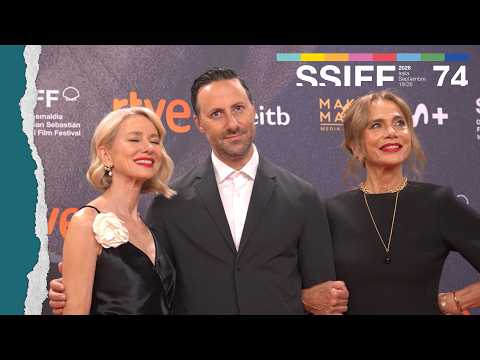 74SSIFF | Naomi Watts - red carpet
01:43
 74SSIFF | La bola negra - red carpet
02:33
 74SSIFF | Closing Ceremony - red carpet
01:17
 74SSIFF | Opening Ceremony - red carpet
01:27
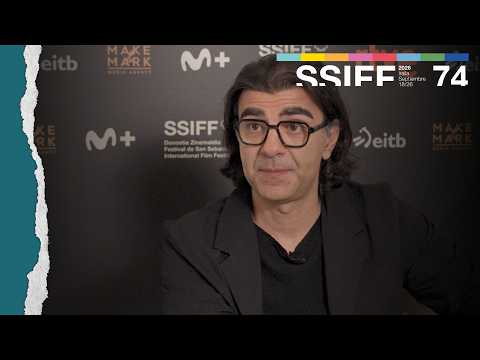 74SSIFF | Geister - interview
08:17