It's a happy coincidence. First, the fact that they liked “Bajañí”
It's a happy coincidence. First, the fact that they liked “Bajañí”
and that they included it in the Official Selection, out of competition.
and that they included it in the Official Selection, out of competition.
Clearly, it's basically a musical film, from the beginning to end, just about music.
And the other one, “Chicho o mientras el cuerpo aguante,”
is a film shot 44 years ago in Sóller, in Mallorca. What happened is that,
suddenly, they contacted me from the ECAM, the Madrid Film School,
to tell me that they want to restore it and I said,
'Man, how nice that someone remembers this film, but there is a small problem:
the negative is lost.' Then, thanks to their initiative,
we kept insisting and found the original 16 millimeters negative.
We were able to digitize it, and restore it, at the Madrid Film School.
It made me very happy. So, while we were doing it, my son,
who really liked the film, told me, 'I want to distribute it' with “Los Ilusos”,
with his people and his group. Even if it was on a small scale,
they wanted to distribute a film like this. But I said, 'That's amazing, isn't it?'
And, then, this one is selected for the Festival too,
on the Klasikoak section for restored movies and classics. It's amusing.
If it weren't for the double amount of work.
But it's amusing to be here with both of them. Mainly, with “Chicho” film.
I love that young people get to discover Chicho Sánchez Ferlosio
and that they connect with him, with his way of living freely, doing what he wants,
seeking happiness, and confort; not the hurdle race
that we all seem to be in all the time, as if that's how life was supposed to be like.
I think that Chicho teaches us a life lesson.
There is music for every moment, for everything.
I, for example, stroll a lot, for an hour more or less, with my headphones on.
Every day, I choose exactly what I'm going to listen.
Today, I want to stroll listening to Wayne Shorter.
Some other day, I want to stroll listening to Dylan.
On a different day, I want to stroll listening to Joan As Police Woman.
Every day, I choose exactly whatever feel like listening at that moment.
That's really nice. You're walking with the music you chose for that day.
I really like that. I can't live without music.
At home, I always have music playing.
Sometimes, when people tell me, 'What are you doing? ',
I say: 'Really, I just listen to music'. From time to time, I make a film.
Of course, I also read a lot.
But listening to music is, perhaps, the thing I spend the most time on.
Lately, there're two films that I really liked,
“Silent Friend” whose director's name I can't pronounce,
and, from here, the other day, Nanni Moretti's. I loved them.
A year ago or so,
I discovered a classic film that I didn't know about,
which was made the year I was born, in 1955.
My son told me, 'Do you know this movie, dad?'
And I answered, 'No, I haven't watched it. ' 'You have to watch it.”
It's a Kinuyo Tanaka's film. She was the actress of Ozu,
Mizoguchi and so many more, and directed six movies which I have seen and I love.
This one is called “The Moon Has Risen”.
After watching it, I said, 'Damn it!' This film is as good as Ford's or Renoir's.
It's a classic. It's incredible to discover a film 70 years later. Wow!
Now it's on my personal Olympus of films.
In fact, I'm finishing a book together with an illustrator.
It's a book to recommend classic films to young people
who don't read and who are incapable of keeping attention after the second line.
They are mainly drawings of my favorite movies made by Clara León
and some small texts for those who don't read.
There's Ozu and Keaton and Murnau and Max Ophüls, and so on.
I put this film in there, it has to be in the book.

 74SSIFF | We Are Naza Too
03:52
 74SSIFF | Weichen (Dust) - kafea
21:03
 74SSIFF | Body of Glass - kafea
22:27
 74SSIFF | El mal hijo - kafea
17:14
 74SSIFF | Esta soledad - kafea
22:45
 74SSIFF | La ilusión de un verano sin fin - kafea
20:26
 74SSIFF | Jaleos - kafea
28:25
 74SSIFF | Tender Loving Care - photocall
01:32
 74SSIFF | 5 minutos más - photocall
01:40
 74SSIFF | Heart of the Beast - photocall
01:48
 74SSIFF | 7h40 ce matin-là / Milo - photocall
01:17
 74SSIFF | El castillo - photocall
01:21
 74SSIFF | Official Jury - photocall
00:59
 74SSIFF | Basque Film Gala - red carpet
02:01
 74SSIFF | Brad Pitt - red carpet
02:28
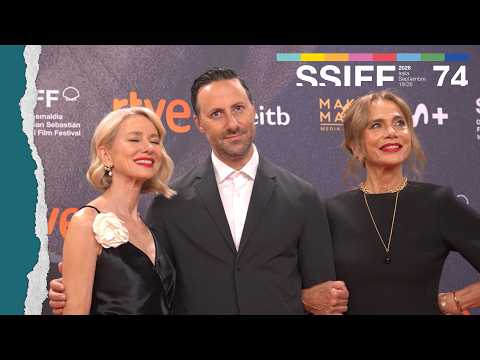 74SSIFF | Naomi Watts - red carpet
01:43
 74SSIFF | La bola negra - red carpet
02:33
 74SSIFF | Closing Ceremony - red carpet
01:17
 74SSIFF | Opening Ceremony - red carpet
01:27
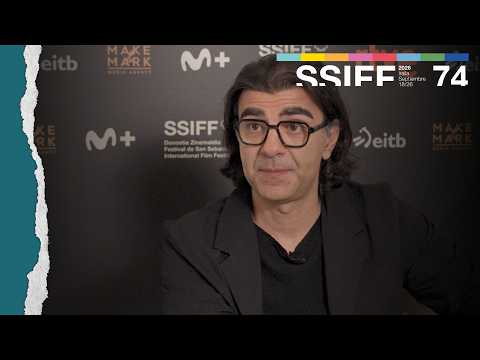 74SSIFF | Geister - interview
08:17