I think it has the tone, the personality, and the characteristics
I think it has the tone, the personality, and the characteristics
of the film I wanted to make, a film that wasn't realistic or social cinema,
of the film I wanted to make, a film that wasn't realistic or social cinema,
an hour and a half long film with a touch of classic charm.
Such classic charm is present in sets, in costumes,
but also in camera planning, and in the structure of the film.
One thing was clear, I wanted to use a melancholic comedic tone to tell the story,
I didn't want any specific cause or thesis supporting it.
I wanted to tell the story first and that afterwards,
from that story, certain themes would be suggested, not the other way around.
I didn't want to build a story around a thesis or a cause.
I think that, in recent years,
maybe because of the influence of series or the excess of audiovisual media,
the audience only watches films that fit their interests. I also do that.
When I search something in a platform, I look for something
that I already think I'm going to like. For me, it's a shame,
because we lost the habit we had as kids of going to Rex, Savoy, or Bellas Artes,
without knowing which films they were going to play.
On the weekends, we would go to the cinema and watch one about kung-fu,
or one about cowboys. You went to the cinema to be surprised,
to experience magic. I remember that, one time, I ended up seeing one of Fellini's films,
I don't know how, when I was a kid. I don't even remember if I liked it,
but I went mental for it. It said, 'Dang, what's this?'
As you know, there's a guy hanging on a string, some musicians,
an open field, elephants, and so on. I think cinema is losing its magic,
its surprise factor. With this film, in a very humble and modest way,
I have tried to bring that back.
I remember when Gros was full of little workshops.
And that's where people still live. Yes, it was a conscious decision,
but it was a vindication that that's not the periphery.
For the people of Alza, the periphery is the María Cristina.
There will be a lot of people from Alza who haven't entered
the María Cristina in their fucking life. But they live in Alza, they stroll near Casares,
they walk up and down. I already had this in mind,
when I spoke to Marian (Fernandez), one of my producers, I told her:
'Look, we have to shoot this movie in Montevideo.'
I find that city fascinating, I love it. All periods of world's history coexist in one city.
I think that, on a subconscious level, I've tried to do that.
I've tried to make it seem as if it were Montevideo,
or as if it were a random Mexican city, or Guadalajara or Portugal.
The galleries, the streets, the staircases, the mortuaries with wooden friezes
that can be found anywhere in the world. Or in any country in the East.
Yes, there was an attempt to normalize that and to vindicate that.
We were already in the process of finding locations.
We're evaluating different locations and I said: 'Fuck!'
I remembered Mamut, and I said, 'We have to go to Mamut to see how it is.'
We were in Mamut and, suddenly, at the bottom of a staircase,
we saw a clogged Santa Claus. That Santa Claus is always there,
at the bottom of the staircase, and they only brought it
out for Christmas and then put it back there. I thought it was wonderful.
That Santa Claus had to be in the movie, so we had to take him with us.
Apparently, that Santa Claus belonged to a friend of mine who works there.
'That thing? That's mine, take it! It's three meters long, so let's see how you take it out.'
It's in the movie because it appeared while we were looking for locations to shoot.
It's very satisfying for me. It's like the moment the rat appears,
the rat appeared for real. We were shooting and all of a sudden:
'What was that?' 'A squirrel.' 'No, it's a rat.' Well, that's the magic of filmmaking.
Since the writing process, the script began
with Tomás Martínez as a man who has extra kilos and lacks hair.
So, I needed someone who looked like that.
I needed someone who has a certain humanity,
and who is not the archetype of a famous actor.
That also led me to say: 'I don't want a famous actor.'
A very curious thing has happened with Iñigo.
We talked about that every time during the filming: 'This is a pathetic guy, he's a bum.'
And he said to me: 'Don't mess with Tomás' I thought he was joking,
but he was the one who defended the character of Tomás the most.
It was very good, because that also made it possible
for him to pour a certain tenderness. Since he believed this so much,
he felt hurt every time we messed with his character.
I’m very happy with the way he does it.
The cleaner couldn’t make it this week.

 74SSIFF | We Are Naza Too
03:52
 74SSIFF | Weichen (Dust) - kafea
21:03
 74SSIFF | Body of Glass - kafea
22:27
 74SSIFF | El mal hijo - kafea
17:14
 74SSIFF | Esta soledad - kafea
22:45
 74SSIFF | La ilusión de un verano sin fin - kafea
20:26
 74SSIFF | Jaleos - kafea
28:25
 74SSIFF | Tender Loving Care - photocall
01:32
 74SSIFF | 5 minutos más - photocall
01:40
 74SSIFF | Heart of the Beast - photocall
01:48
 74SSIFF | 7h40 ce matin-là / Milo - photocall
01:17
 74SSIFF | El castillo - photocall
01:21
 74SSIFF | Official Jury - photocall
00:59
 74SSIFF | Basque Film Gala - red carpet
02:01
 74SSIFF | Brad Pitt - red carpet
02:28
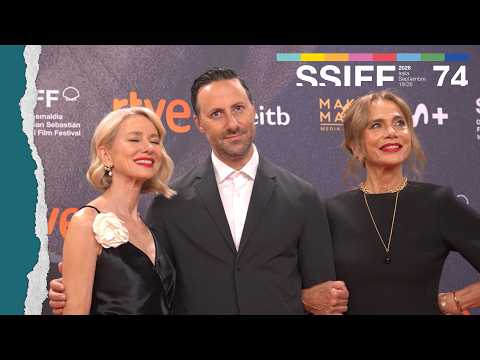 74SSIFF | Naomi Watts - red carpet
01:43
 74SSIFF | La bola negra - red carpet
02:33
 74SSIFF | Closing Ceremony - red carpet
01:17
 74SSIFF | Opening Ceremony - red carpet
01:27
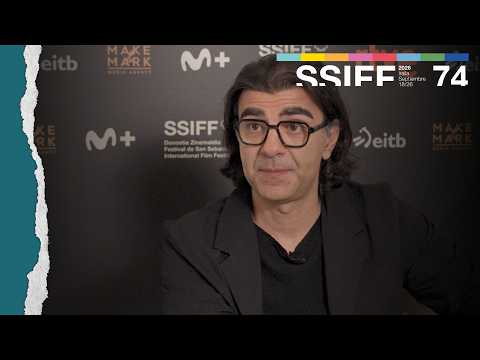 74SSIFF | Geister - interview
08:17